How a decade of conversations became European Freude.
BEGINNINGS
European Freude grew out of a long-standing European conversation between Else Christensen-Redzepovic and Silke Hohmuth.
In 2016, Else initiated European Angst for the Goethe-Institut Brussels, a project exploring the questions, uncertainties and challenges shaping Europe at the time.
In September 2017, Else and Silke met for the first time at the Konferenz der Konkurrenten (Conference of Competitors) in Dresden, Germany — a conference bringing together representatives of the German candidate cities for the European Capital of Culture 2025 to exchange ideas and rethink collaboration beyond competition.
A SHARED JOURNEY
Over the following years, they stayed connected through European initiatives and cultural dialogues, including the New European Bauhaus, Corporate Cultural Responsibility and many other conversations about Europe’s future.
Over time, a friendship grew, rooted in a shared belief that young people should play a much stronger role in shaping Europe’s future.
A NEW DIALOGUE
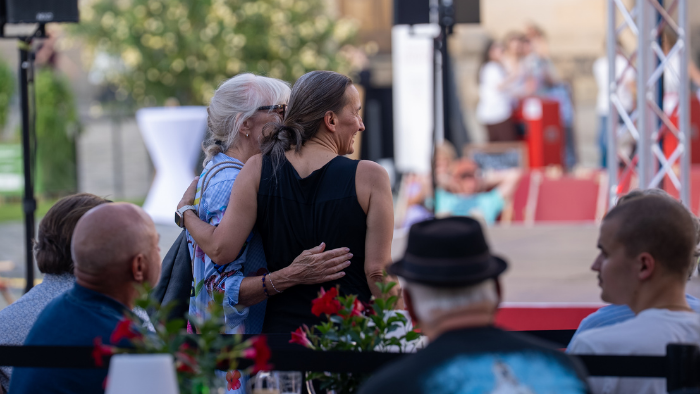
In November 2025, Else and Silke met again at the closing weekend of the European Capital of Culture Chemnitz 2025.
Together, they asked a simple question:
How can we create a European dialogue that gives the next generations hope — where young people are not only heard, but where their ideas, questions and perspectives are taken seriously by those shaping Europe today?
Nearly ten years after European Angst, they realised it was time to continue the conversation—not by focusing on what divides us, but on the values that connect us.
EUROPEAN FREUDE
European Freude is built on three shared European values:
Freedom. Peace. Joy. Three values that have shaped Europe in the past—and can help shape its future.
European Freude invites young people, cultural organisations and partners across Europe to shape a new European dialogue — together.
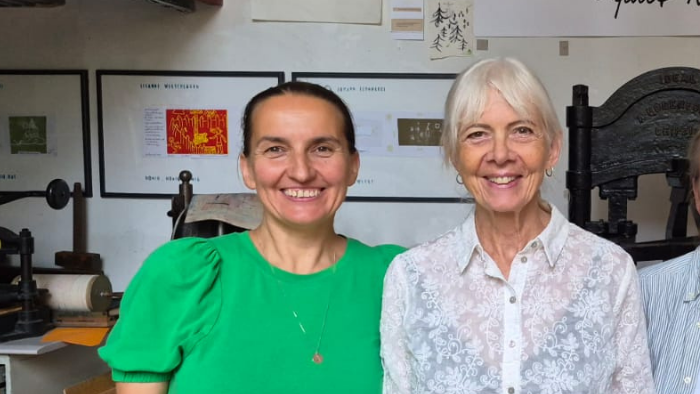
Silke Hohmuth (left) and Else Christensen-Redzepovic (right) at Buchkinder Dresden e.V. in the Künstlerhaus Dresden-Loschwitz, where the first concrete ideas for European Freude took shape.